
Products News
What Is an Insulator?
What Is an Insulator?
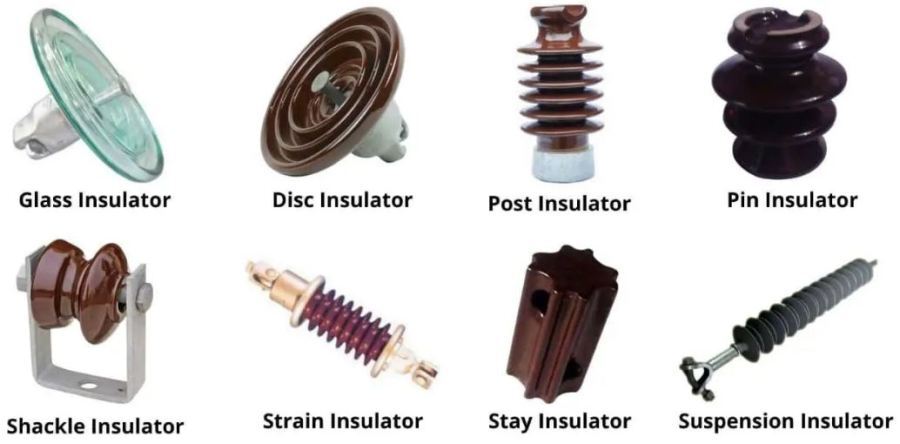
Electrical insulators prevent the flow of electricity in order to avoid voltage differences.sample insulator This can be important in areas where there may be significant voltage, such as in high-voltage systems.sample insulator In these cases, insulators are used to prevent arcs between wires or between a power line and a structure on the ground. Insulators are also often used to prevent other kinds of problems, such as corona discharge that can lead to power losses. There are many different types of insulators, including cellulose insulation and fiberglass insulation. The type of insulator used depends on the application and the type of voltage to be handled.
The main difference between conductors and insulators is that conductive materials allow electrons to move easily from one atom to another, while insulators stop this process.sample insulator Some examples of insulators include wood, air, glass, ceramic and rubber. In addition to this, certain metals can act as either conductors or insulators, depending on their form and allotrope.
Generally, the best electrical insulators are organic materials such as cellulose or fiberglass, while synthetic substances and metals tend to be poor insulators.sample insulator Similarly, thicker objects tend to be better insulators than thinner ones. The reason for this is that larger objects have less empty space, which makes it more difficult for electricity to pass through them.
Most insulators are composed of covalent bonds, which keep the electrons tightly bound to the atoms.sample insulator This is why most organic materials are electric insulators. However, some inorganic materials such as glass are also good insulators. In addition, some water is a good conductor of electricity, while pure water is an insulator. This is because salts and other ions in sea water can cause it to conduct electricity.
In terms of physics, electrical insulators have a large energy gap between the "valence" band (containing the highest energies) and the next higher energetic band.sample insulator In other words, it takes a lot of electricity to get the electrons in an insulator to cross this gap and become free to pass through it. This is why insulators can sometimes be punctured by an electric current, which causes them to cease being insulators and to pass charge.
There are many applications for insulators, including wire sheathing, insulation on electrical equipment and clothing.sample insulator Insulators can also be liquid, such as insulator oil, which is used to replace air in spaces that must support high voltage without electrical breakdown. In high voltage systems, insulator oil is also used to prevent arcs between the wires or between the power line and structures on the ground. Other methods for insulating high-voltage lines include placing wires far enough apart to use air as an insulator, or using ceramic or glass wire holders instead of bare copper. The type of insulator used in high-voltage systems depends on the amount of voltage to be carried, as well as the temperature at which it will operate. For example, high-voltage insulators are often coated in a plastic or silicone material to protect against mechanical damage and corrosion.
0users like this.
