Products News
What Is a Low Voltage Switchboard?
What Is a Low Voltage Switchboard?
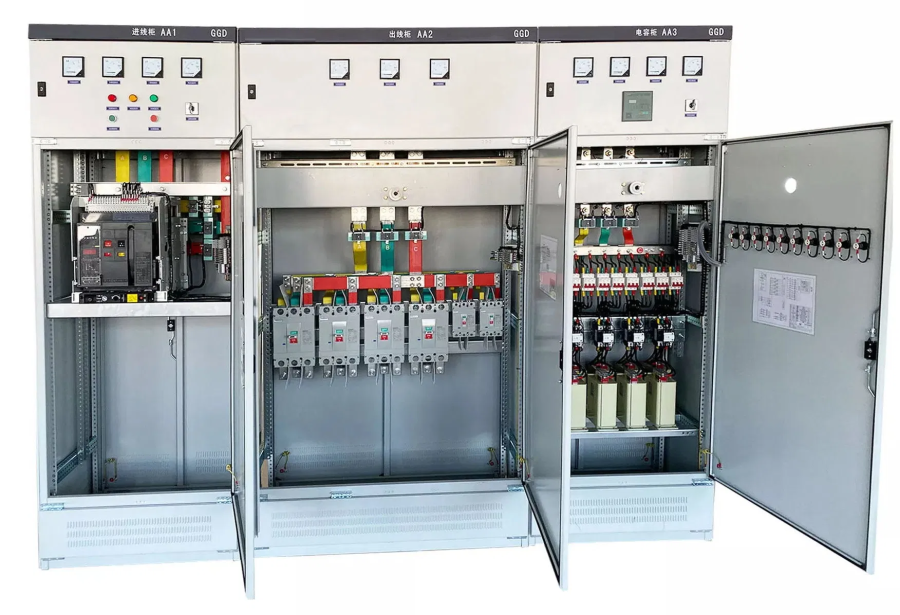
A low voltage switchboard is a free-standing enclosure that houses circuit breakers, bus bars and power cables to manage and distribute electricity within a building or structure. The electrical systems contained in these switchboards operate at a lower voltage than high-voltage electrical devices, but they still require careful management to prevent electrical hazards. The evolution of switchboards has been accompanied by technological innovation, and today’s low voltage switchboards are highly advanced and fully integrated with the intelligent electrical grid.
The defining features of a low voltage switchboard are the protective measures that they provide to limit the impact of short-circuit currents and protect maintenance workers from potentially dangerous electrical discharges. They also ensure that power is distributed evenly across an entire system, safeguarding equipment against overloads and reducing downtime caused by network interruptions.
Switchboards may contain meters, relays, potential transducers and current transducers to manage the flow of electricity throughout a power distribution system. Moreover, they may include transfer schemes for redundant power. A standard low voltage switchboard will typically be designed to accommodate a maximum of 1200 A of incoming current.
There are two primary kinds of low voltage switchboards: fuse switchboards and circuit breaker switchboards. Fuse switchboards are equipped with replaceable fuses that fuse when network irregularities occur, protecting components and maintaining a safe voltage supply. Circuit breaker switchboards, on the other hand, feature circuit breakers that trip (similar to a switch) when they are overloaded, protecting equipment and maintenance workers from electrical discharges.
Both fuse switchboards and circuit breaker switchboards are designed to adhere to industry standards set by organizations like the American National Standards Institute, UL, the IEEE and the International Electrotechnical Commission. Moreover, the requirements in NFPA 70: National Electric Code for both switchgear and switchboards are nearly identical when discussing working clearance requirements, arc energy reduction, grounding/bonding and installation standards.
LV switchboards can be built to include a variety of additional components for enhanced functionality, including automatic transfer switches, TVSS, distribution transformers and PLC or relay based transfer schemes. Furthermore, they can be arranged to support a combination of front and rear access, depending on the requirements of the electrical project.
In addition to circuit breakers and fuses, a low voltage switchboard will typically feature safety measures such as grounding, arc fault detection and isolation, which are crucial in preventing electrical injuries to human operatives. Isolation is particularly important since it allows maintenance personnel to safely separate a faulty circuit or apparatus from an energized system.
The QED-2 line of UL 891 low voltage switchboards offers shorter lead times and a wide range of options, ratings, and options to meet the specific electrical needs of any project. In addition to delivering quick shipments, these switchboards are engineered with the latest breaker communications options for ease of use and to reduce downtime caused by a power outage. In addition, the QED-2 low voltage switchboards are backed by a large distributor, sales and service network to provide a full lifecycle of services and support for their customers.
Tags:medium voltage switchgear | automatic voltage stabilizer | capacitive voltage transformer | low voltage switchgear
0users like this.