
Products News
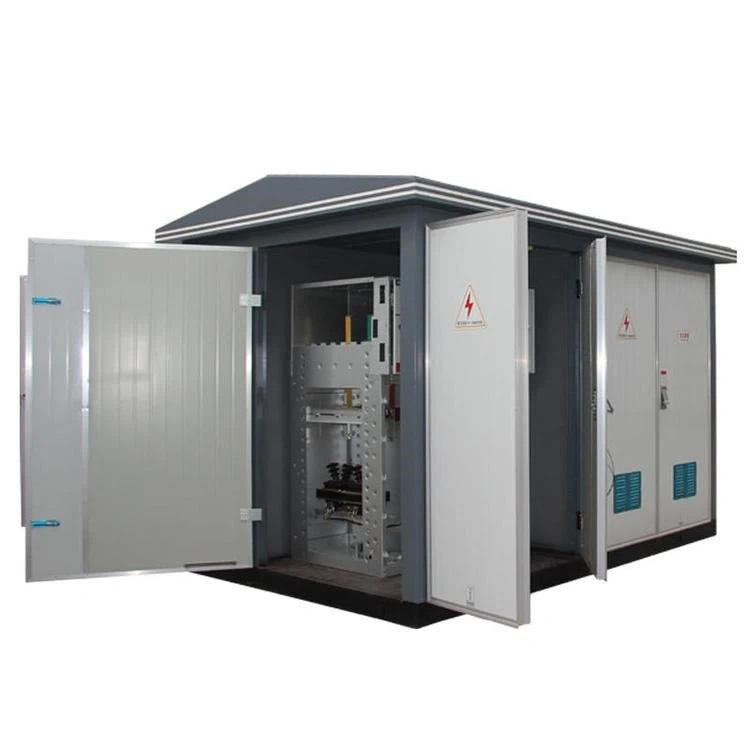
What Is a 33kv Substation?
What Is a 33kv Substation?
A 33kv substation is a vital piece of electrical infrastructure that steps down high-voltage transmission lines for distribution to consumers. These power systems provide efficient and reliable electricity transmission and play a significant role in ensuring the overall reliability of electrical grids. Designed with a compact footprint, these energy infrastructure solutions consist of a transformer and switchgear all housed in a single unit to reduce installation costs and minimize the footprint of the system.
Power (P) depends on both voltage (V) and current (I). A higher voltage allows for the transfer of power over a greater distance, while maintaining a constant current. This helps to avoid losses caused by heat generation during transmission, which is a major cause of power shortages in many countries. Hence, the higher the voltage, the more efficient a transmission line is.
The 33kv substation is a medium-voltage power distribution system that converts high-voltage transmission power to a lower level suitable for distribution. It also provides protection, control and monitoring systems to ensure the safety of the system. This type of substation is ideal for urban areas, industrial zones, and remote locations where space is limited.
33kv substations have different configurations depending on the specific needs of the network. A distribution substation is usually much larger than a transmission substation, as it contains more equipment such as circuit breakers and switches. It is also important to remember that the size of a 33kv substation can be increased or decreased based on the load requirements of the system.
For this project, the choice of a distribution substation was made based on the client’s requirements. The capacity of the 132kv/33kv substation was determined by the ONAF ratings of the two power transformers. Afterwards, feeders were chosen to ferry the power to the designated consumer zones. The chosen feeder system was a loop-type which means that the 11 kV bus is fed from both power transformers via a ring. A circuit breaker is placed between each feeder to separate them should a fault occur in one of them. Sulphur-hexafluoride (SF6) circuit breakers were used for this purpose.
The 132kv/33kv substation receives power at 132kV from the generating station and is then stepped down to 33kV. This is necessary since the transmission system of the power supply network is too high for domestic users, so it has to be stepped down to an acceptable level for local distribution. The system is then distributed to end consumers in the area, providing a safe and reliable power supply to residential and commercial properties.
A 33kv substation is the closest to the final consumers of a power network, so any failures in the system directly impact customer service. This is why the design of a 33kv substation must be focused on quality, reliability and efficiency. The distribution system is responsible for delivering power to customers and must be constantly monitored for any problems or outages. It is also a good idea to consider the potential impact of any future expansion plans on the system, so that upgrades can be planned in advance.
0users like this.
