
Products News
The Importance of Load Switches
The Importance of Load Switches
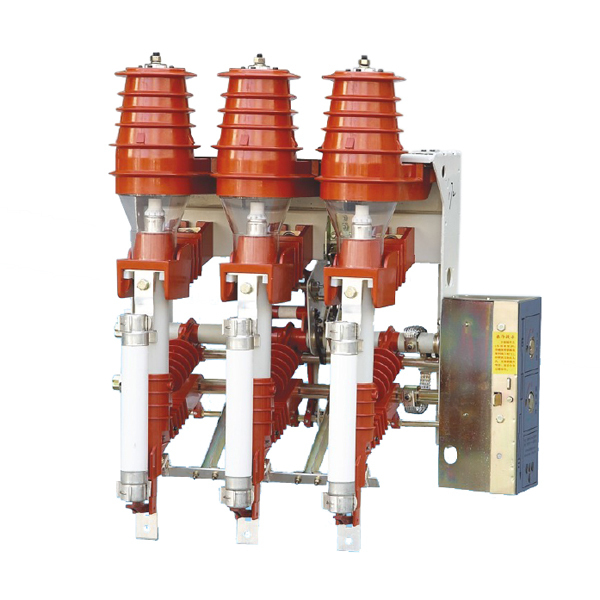
In power systems, the load switch plays a key role. It helps to isolate and handle short-circuit faults in the power lines, control electrical equipment, and protect against damage from overvoltage. Moreover, it is also an important component for the stable operation of the power system. Hence, a proper selection and use of the right load switch is crucial for power production in power plants and other distribution networks.
The main function of the load switch is to switch current-carrying devices in and out of circuits, thereby enabling them to operate under undisturbed conditions and with the intended operating current. Additionally, it can be used to provide power supply sequencing and IC protection functions such as overvoltage, overcurrent and reverse current protection.
Unlike power relays, load switches can be used with both AC and DC power sources and can handle much larger currents and voltages. This makes them suitable for a wide variety of industrial and automotive applications including industrial machinery, electric motors, and battery-powered consumer electronics.
Load switches are essentially semiconductor switches that work somewhat like a relay. They have two MOSFET transistors (one NMOS and one P-channel) that act as the switching element when the switch is ON or OFF. These transistors are connected in series with the output capacitor, thereby controlling the current flow from the source to the output node. This is important because it prevents the input voltage from sagging when the load switch turns on.
This sag is caused by the rapid charging of the load capacitor and is undesirable since it may affect other components that are connected to the same power rail. The load switch can mitigate this by controlling the rate at which the capacitor charges, reducing the inrush current.
Another important feature of load switches is their quick output discharge capability. This is achieved by an on-chip resistor from VOUT to GND that is turned on when the device is disabled via its ON pin. The output node is quickly discharged, preventing it from floating when the switch is off.
Lastly, load switches can be used to power up or sequence ICs without the intervention of a microprocessor. This is especially useful in power-efficient devices such as mobile phones and wearables that require a high level of power sequencing.
Finally, the use of load switches in a design can significantly reduce the bill of materials and PCB area. Discrete FETs typically require additional components such as gate drivers, control logic, and output discharge, which are often integrated into a single load switch IC. This enables designers to build more advanced, more reliable and cost-effective power management designs in their products. It can even lower the total BOM count and power consumption of the system. This is especially important in applications such as industrial, medical and automotive devices that rely on lithium-ion batteries. However, it’s important to keep in mind that a load switch cannot replace a full-featured, isolated power switch.
0users like this.
