
Products News
Installing a Lighting Arrester in Substation
Installing a Lighting Arrester in Substation
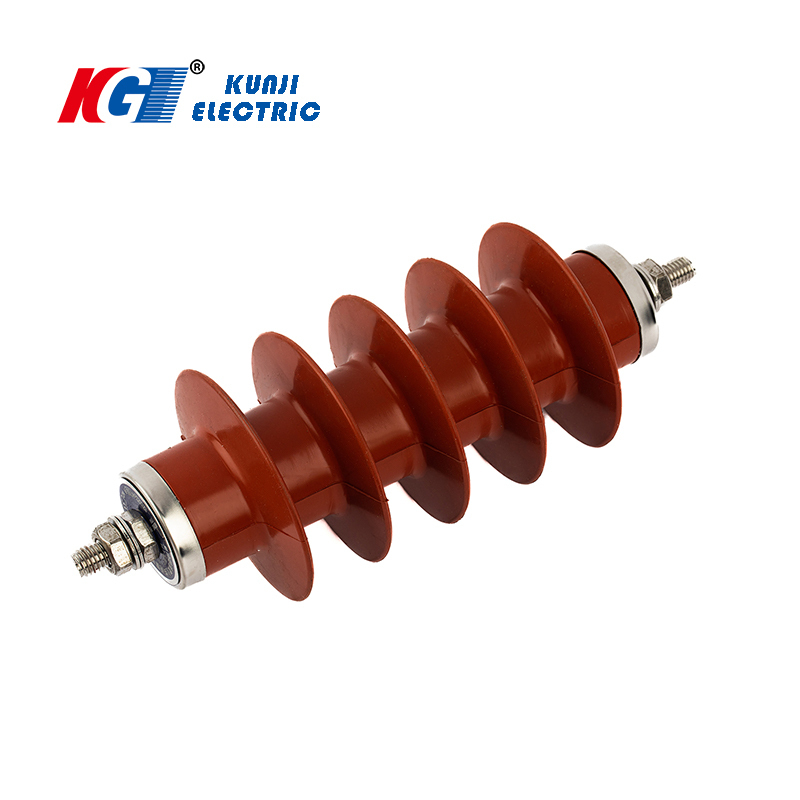
A lightning arrester is a device that protects the power lines of your substation from damage by providing a low-resistance discharge path to ground.lighting arrester in substation It is used to prevent overvoltages caused by lightning strikes and other transient surges from reaching your circuitry. These devices are connected to each conductor between the pole and ground in AC systems or to the ground and a transformer in DC systems. They also prevent the normal current of the line from flowing to the ground, which can cause fires. They can also be connected between the inlet and outlet terminals of circuit breakers or to the connections of busbars.
It is important to understand how a lighting arrester works before installing one in your substation.lighting arrester in substation Essentially, the device breaks down when it is subjected to an abnormal voltage above its breakdown value and diverts the current to ground. It should be able to do this without damaging the insulation and without losing its durability. It is also important to determine the total transient energy that an arrester can safely dissipate, which is known as its energy capability.
This information can be found on the arrester datasheet and is a critical factor in ensuring that your arrester will perform effectively.lighting arrester in substation It should be based on both the MCOV (maximum continuous working current) and the residual voltage. The MCOV decision should be a thermal decision that ensures safety and longevity while the residual voltage decision will dictate the arrester’s protective efficacy against switching surges.
There are several different types of lightning arresters that you can choose from, depending on the requirements of your system. The most commonly used arrester is the metal oxide varistor (MOV), which is a highly reliable choice for high-voltage applications and offers the highest level of protection. Another option is the horn gap arrester, which is a good choice for medium-voltage applications.
The MOV type is typically used in substations, since it can withstand higher impulse currents and provides the best overall performance. The horn gap arrester, on the other hand, is ideal for smaller applications and is cost-effective. Both options are available in a variety of classes and ratings, so it is important to select the correct type for your specific needs.
It is also important to install the arrester in the best location possible, as this will help reduce the resistance and allow it to dissipate surge energy faster. Ideally, it should be placed close to the grounding system so that it can minimize the lead length and provide maximum protection against voltage spikes. It is also a good idea to install redundancy, as this will ensure that if one arrester fails, the other will continue to function. This is particularly important in high-priority infrastructures such as substations. Using this approach will also help to increase the longevity of the arrester by protecting it from premature failure due to excessive stress.
Tags:compact substation | gis substation
0users like this.
