
Products News
How a Step Up Down Transformer Works
How a Step Up Down Transformer Works
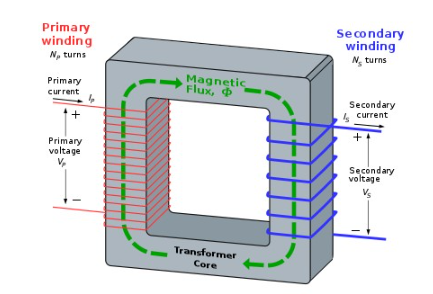
A step up down transformer takes the high-voltage electricity that’s distributed to homes by power stations and turns it into low voltage for appliances and lighting.step up down transformer It’s a critical component of power distribution systems everywhere, making long distance transmission of electricity possible and helping to keep our electronic devices and household equipment safe and efficient. It works by transforming the AC (alternating current) electricity that’s delivered to our homes from high to low output levels by using two coils of wire, one called the primary winding and the other called the secondary winding. The number of times the windings wrap around each other dictates the strength of electricity that’s transmitted between them.
The primary coil has more turns of wire than the secondary coil, which means that it has a higher inductance—the amount of magnetic energy required to induce current in the coils—than the secondary coil.step up down transformer The higher the inductance, the greater the induced voltage and the more current that’s conducted through the system.
When the AC enters the primary coil, it generates a magnetic field in the core that constantly changes, which then induces an equal and opposite alternating current in the secondary coil.step up down transformer When the primary and secondary windings are matched properly, this results in an effective electrical current that’s transmitted across the entire length of the core—the distance from the end of the primary coil to the end of the secondary coil.
In this case, the resulting current in the secondary coil will be about ten times less than the voltage that’s applied to the primary side of the transformer.step up down transformer The difference in voltage between the primary and secondary sides of the transformer is what’s known as the transformation ratio.
While the same transformer can be used as either a step up or step down version, it’s important to understand how these functions differ because they play such an essential role in the transmission and distribution of electrical power.step up down transformer A step-up transformer increases voltage, while a step-down transformer decreases it.
Step-up transformers are often used in power lines for long-distance transmission because the increased voltage allows for lower current levels, which reduces energy loss due to heat during the transmission process.
In addition to having more turns of wire in the primary coil, a step-up transformer also tends to use larger gauge wire in the secondary winding, as it will be carrying much more current than the primary side. This helps to ensure that the induced current in the secondary coil is strong enough to overcome the electrical resistance offered by the iron core, so that there’s no power loss during transmission. This is why it’s important to always follow the transformer manufacturer’s instructions when connecting and using them. Typically, the wires on a step-up transformer will be marked with polarity-marking dots that indicate which is the primary and which is the secondary. This is to help prevent people from mistakenly connecting them in reverse, which can damage the transformer or cause dangerous high-voltage currents that could harm a person.
Tags:current transformer
0users like this.
