
Products News
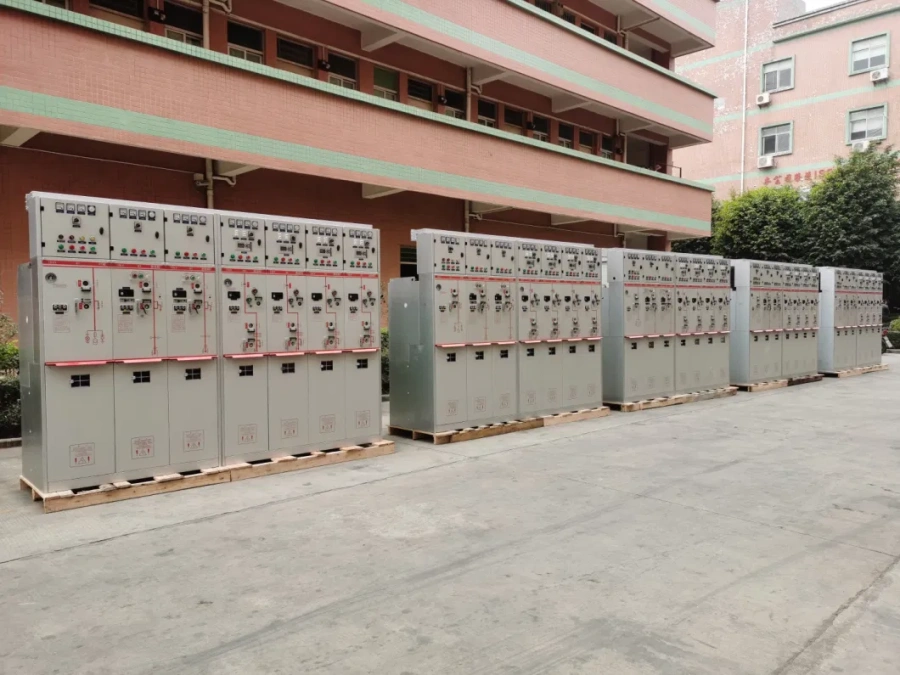
Electric Switchyards and Substations
Electric Switchyards and Substations
Just like railroad switchyards direct trains onto the right tracks, electrical switchyards direct electricity on to large transmission lines for distribution.electric switchyard This highly complex, critical infrastructure involves extremely dangerous equipment that must operate at high voltages in order to transfer energy over long distances. Switchyards are filled with transformers, circuit breakers and switches that work together to send electricity to its destination and control the flow of power in the event of a problem.
Substations are points in the transmission system at which electric power is transferred from the generating plant to other substations or to transmission lines and into the local distribution system.electric switchyard They receive the power transmitted at high voltages from the generating station, transform the voltage to a lower level that is more suitable for local distribution, and connect and disconnect transmission lines or equipment when necessary.
These devices may be located near a power plant or directly adjacent to a power line.electric switchyard They consist of a number of insulated structures with high-voltage equipment, including transformers, circuit breakers and switches. The most important function of a substation is to control the amount and direction of power flow within the transmission system, helping balance supply and demand. They are also designed to protect the system from damage by transferring fault currents and disabling them before they can cause any harm.
Most substations have a central hub that is known as the bus.electric switchyard The bus is a main bar of aluminum or copper conductors, supported on porcelain insulators that carry the electrical energy from one end to the other. A typical electric substation has a number of switching arrangements that are connected to the busbar. The arrangements are laid out in bays which are isolated from each other by circuit breakers or switches. This allows individual bays to be disconnected and serviced without interrupting incoming or outgoing transmission lines.
Another key part of a switchyard is the high-voltage bus that routes energy into the substation.electric switchyard This is typically a bare metal tube that is insulated from adjacent conductors, grounded structures and the substation grade by air. A series of porcelain or composite bushings connect the insulated tubes to the circuit breaker and transformer.
The voltage of the high-voltage bus is controlled by a system of circuit breakers and switches in the switchyard.electric switchyard These can be operated either remotely from a control room or manually by an operator on the ground. The switches are often insulated by sulfur hexafluoride, a nontoxic, inert gas that is used to insulate the medium and high-voltage equipment in substations and switchyards around the world.
The design of an electric switchyard requires a number of complex engineering studies to set the correct specifications for each piece of equipment. These include load flow and short circuit studies to ensure that the equipment can handle the amount of power it will need to deliver. It is not unusual to find several different configurations for a single switchyard in a particular location to allow for future expansion. Energy Erectors has worked with many power companies to design and construct the switchyards needed for their expanding infrastructure. For example, our team helped Dominion Energy build a new multi-million dollar Cumulus Substation in Ashburn, Virginia. Our crews were also selected to build a 500-kilovolt substation for NextEra Energy in Kansas and help NextEra expand its wind farms across the state.
0users like this.
